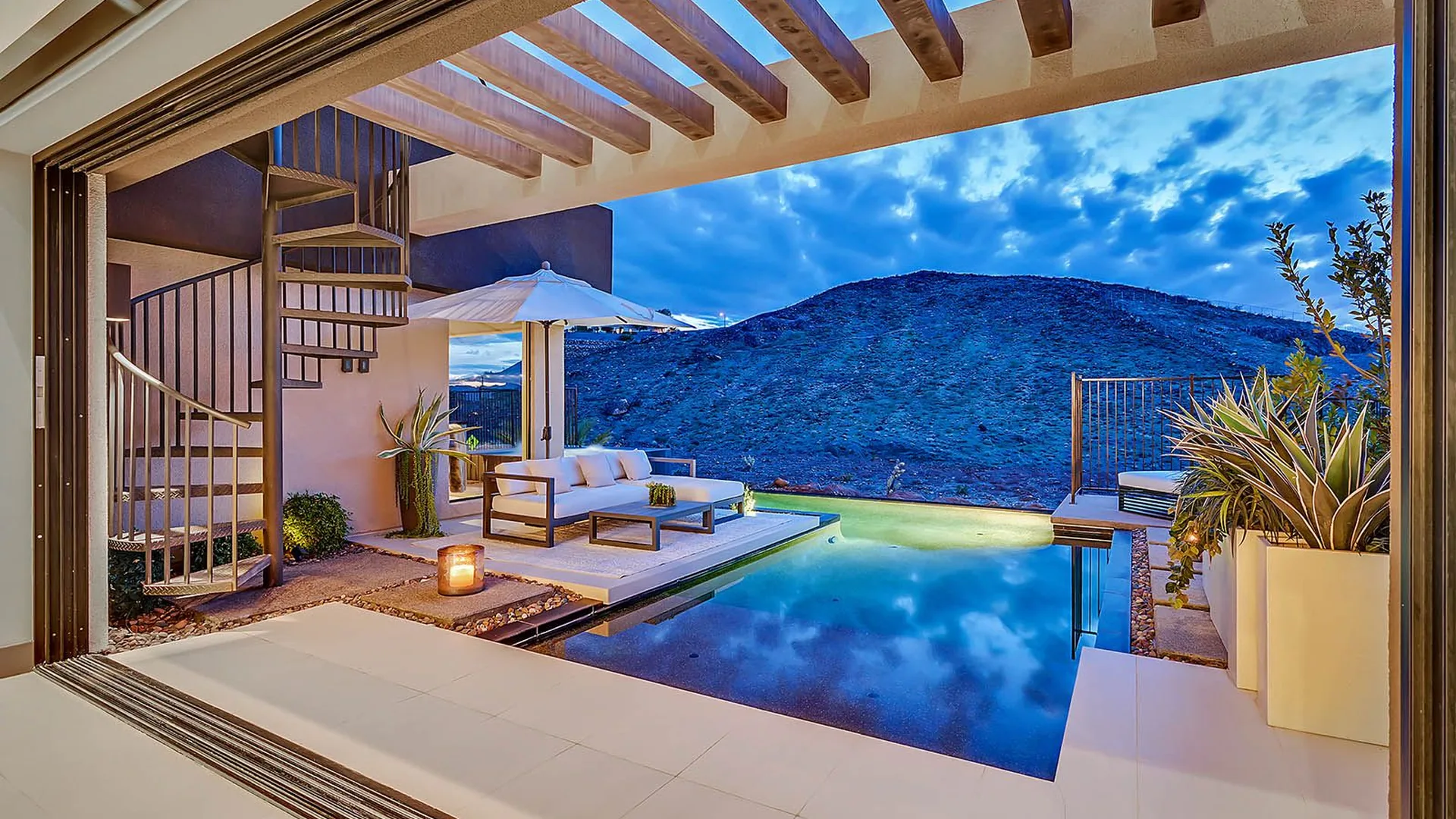
Nevada STR Tax Stack. Cost Segregation + STR Loophole + No State Tax
Program figures verified July 2026, details change; confirm your scenario with us.
The 60-second answer
Nevada short-term rental (STR) investors who properly stack three tax strategies can see first-year tax benefits of $100K-$500K+ depending on property scale:
- Cost segregation study: accelerates depreciation from 27.5 years (residential) or 39 years (commercial) to 5-15 years for many property components
- STR loophole (100-hour material participation rule): STR with material participation isn't passive activity; depreciation can offset ordinary income
- NV no state income tax: All tax savings flow through; no NV state tax reduction needed
- Bonus depreciation: 100% bonus depreciation for qualifying short-life property (subject to current tax law)
For Nevada STR investors at Incline Village, Reno, Henderson, Lake Las Vegas, this combination is one of the most powerful tax strategies in real estate.
Critical: Requires CPA-driven structuring. Mike originates the financing; CPA structures the tax strategy.
How the tax stack works
Step 1: Buy NV STR property
- DSCR loan or conventional investor financing
- Tahoe NV-side, Las Vegas (Henderson-permitted areas), Reno (Washoe-permitted areas)
- Property must be STR (vs LTR)
Step 2: Conduct cost segregation study
- Engineering-based analysis identifies property components
- Reclassifies from 27.5-year residential depreciation to 5-15 year shorter lives
- Typical study cost: $5K-$15K
- Typical benefit: 25-40% of property value as accelerated depreciation
Step 3: Establish 100-hour material participation
- Spend 100+ hours per year on STR activity
- Document hours carefully (calendar, time log)
- Plus active participation in management decisions
- This converts passive STR to active business
Step 4: Take depreciation against ordinary income
- Cost segregation generates substantial Year 1 depreciation
- 100-hour rule allows this to offset W-2 + business + capital gains income
- Without 100-hour rule: depreciation only offsets passive income
Step 5: Bonus depreciation accelerates further
- 100% bonus depreciation for property placed in service in qualifying year (verify current tax law)
- Combined with cost segregation: substantial Year 1 deduction
Step 6: Hold + benefit from NV no state tax
- Annual STR income NV-source (0% state tax)
- Depreciation continues over property life
- Eventual sale: NV no state capital gains tax
Real-world example: $1.5M Incline Village STR
Setup
- Property: $1.5M Incline Village home
- Use: STR (Washoe County STR permit)
- Investor: W-2 income $385K + STR income
- Mike originates DSCR loan: $1.05M at DSCR pricing
- Down payment: $450K (30%)
Cost segregation analysis
- Cost seg study identifies $450K in 5-15 year property components
- 30% of property value reclassified
- Available for accelerated depreciation
Year 1 tax benefit
- Bonus depreciation (if 100% applies): $450K Year 1 deduction
- STR loophole + 100-hour rule: Deduction offsets W-2 income
- Federal tax bracket (40%): $180K federal tax savings Year 1
- NV state tax savings: $0 (no NV state income tax to reduce)
- Total Year 1 federal tax savings: ~$180K
Year 1 cash flow
- Down payment: $450K
- Cost seg study fee: $10K
- Tax savings Year 1: ~$180K (vs federal tax otherwise paid)
- Net effective Year 1 cost: ~$270K (after tax savings)
Years 2+
- Annual STR income (NV no state tax): substantial cash flow
- Ongoing depreciation reduces ordinary income
- Property appreciation + cash flow combined
Sale (eventually)
- NV no state capital gains tax
- Depreciation recapture at federal level
- Net wealth: substantial despite recapture
STR vs LTR for tax strategy
Why STR specifically (vs LTR)
STR with 100-hour rule:
- Active business income
- Cost seg depreciation offsets W-2 + ordinary income
- Powerful tax shelter
LTR (long-term rental):
- Passive income (per tax classification)
- Cost seg depreciation only offsets passive income
- Less powerful tax shelter
For high-income investors: STR + 100-hour rule is the differentiator.
Material participation requirement
- 100+ hours per year personally + more than any other person, OR
- 500+ hours per year personally, OR
- Substantial participation in management decisions
Documentation essential.
NV-specific STR + tax considerations
Where STR is permitted in Nevada
- Incline Village (Washoe County): Permits available; no cap
- Crystal Bay (Washoe County): Same as Incline
- Henderson: STR permits available with licensing
- Reno (Washoe County): Generally permits available
- Las Vegas City: Limited (660-ft separation rule)
- Unincorporated Clark County: MORATORIUM (new STR licenses generally not available)
- Glenbrook + some Tahoe NV-side communities: HOA-restricted
Where STR is blocked
- Most unincorporated Clark County (where most LV master-planned communities are)
- Specific HOAs prohibiting STR
- Limited LV proper beyond 660-ft separation properties
For NV STR tax stack, target Henderson, Incline Village, or Reno where STR is permitted.
Cost segregation study basics
What it identifies
- Land improvements (15-year life)
- Personal property (5-7 year life)
- Specific building components
- Some assets allowed bonus depreciation
Study process
- Engineer-led analysis (typically 3-6 months)
- Site visits + plans review
- IRS-defensible documentation
- Tax-deductible study fee
Cost
- $5K-$15K typical for residential STR
- Larger commercial: more expensive
- ROI typically 8-15x in first-year tax savings
Best for
- Higher-value properties ($500K+)
- Higher-income investors (more tax to save)
- STR strategy with 100-hour rule
- Combined with bonus depreciation
Common NV STR tax stack scenarios
Scenario 1: Bay Area tech executive Incline STR
- Bay Area: $475K W-2 + $850K RSU annual
- NV residency moving for tax benefits
- Buys: $2.4M Incline Village STR
- DSCR loan + cost seg + STR + 100-hour rule
- Year 1 tax savings: ~$280K
- Outcome: Premium STR + substantial tax shelter
Scenario 2: NV resident physician Reno STR
- Reno physician, $625K income
- Buys: $725K Reno STR
- DSCR loan + cost seg + STR + 100-hour rule
- Year 1 tax savings: ~$130K
- Outcome: Income shelter + ongoing cash flow
Scenario 3: LV-resident investor Henderson STR
- LV resident, $285K W-2
- Buys: $625K Henderson STR (permitted)
- DSCR loan + cost seg + STR + 100-hour rule
- Year 1 tax savings: ~$95K
- Outcome: Tax shelter + cash flow
Scenario 4: Bay Area founder pre-IPO + multiple STRs
- Pre-IPO founder, $475K W-2 + anticipated $25M IPO
- Buys: 2 STR properties (Incline + Henderson) = $3.5M total
- DSCR loans + cost seg + STR + 100-hour rule
- Year 1 tax savings: ~$450K
- Plus IPO timing alignment for additional NV tax savings
- Outcome: Substantial portfolio + tax optimization
Scenario 5: Retiree wealth optimization
- 62-year-old retiree, $8M portfolio
- Buys: $1.85M Tahoe STR
- Cash purchase OR partial DSCR
- Cost seg + STR + 100-hour rule
- Year 1 tax shelter against portfolio gains
- Outcome: Retirement income optimization
How lenders are actually told to treat rental income
Agency rules set the floor even on a DSCR loan. Fannie Mae renumbered its rental-income requirements in Announcement SEL-2026-08, moving the guidance from B3-3.1-08 to B3-3.8-01, mandatory for applications taken on or after November 1, 2026. Freddie Mac carries its own treatment in the Seller/Servicer Guide. On a true DSCR program the ratio replaces personal income entirely, but the appraiser’s rent schedule or the signed lease still sets the income figure, not a listing price. Nevada adds its own layer: trustee sales run under NRS Chapter 107, and valuation is administered by the Nevada Department of Taxation.
Frequently asked questions
What's the 100-hour rule exactly?
Spend 100+ hours per year personally managing the STR AND no one else spends more. This converts STR from passive activity to active business. Document time carefully.
Can I qualify for the STR loophole if I use property management?
Yes, but you must still spend 100+ hours yourself AND more than the property manager. Property manager's hours count separately.
Does cost segregation really save that much?
Yes, for higher-value properties + higher-income investors. Study cost ($5-15K) typically returns 8-15x in first-year tax savings.
What about bonus depreciation rules in 2026?
Bonus depreciation is back to 100% and permanent for property placed in service after January 19, 2025, under the 2025 OBBBA law (IRS Notice 2026-11). Property placed in service January 1-19, 2025 stays under the old phase-down. The building itself uses 27.5-year depreciation; cost segregation reclassifies 5- and 15-year components to capture the 100% first-year write-off. Confirm your specifics with a CPA.
Can I do this in Clark County (Las Vegas)?
STR moratorium in unincorporated Clark County (where most LV is) blocks new STR licensing. Use Henderson, Reno (Washoe), or Incline Village instead.
What if I'm not an NV resident?
NV no state income tax benefit applies to NV residents. Non-residents pay state tax in their resident state. Strategy still works with reduced ongoing benefit.
What about depreciation recapture at sale?
Yes, depreciation taken must be recaptured at sale (typically 25% federal rate). Plan accordingly. Long-term wealth still strong even after recapture.
Should I do cost seg on every STR?
For higher-value ($500K+) STR with substantial improvements: yes. For lower-value or simpler properties: study cost may not be worth it. CPA-driven decision.
Can I deduct the cost seg study fee?
Yes, typically deductible business expense. CPA-confirmed.
What about LLC structure?
Combine LLC ownership (asset protection) with tax stack. See Nevada LLC + Series LLC for Rental Property.
Talk to Mike about your NV STR + tax stack scenario
Free 30-minute call. Mike originates financing; refers to qualified NV CPA for tax structuring.
(480) 296-6513 · Mike Certo, NMLS #260555 · Cornerstone First Mortgage NMLS #173855
Sources
Mike Certo · NMLS #260555 · Cornerstone First Mortgage NMLS #173855 · Equal Housing Lender. Not legal or tax advice. Consult qualified NV CPA + tax attorney for tax structuring. Loans subject to buyer and property qualification.